Monday, March 28, 2016

Kenzie's Realistic Fiction

"David Goes to School" By David Shannon is a cute funny short story that is full of mischievous acts of David when he goes to school. David tends to break the school rules, and doesn't realize he will soon will face the consequences for his actions. Some of the things he does is, flys paper planes in the classroom, colors the desk when its not allowed, and doesn't listen to the teacher. But sooner before he realizes he has to stay after school and make up for all his mistakes he has made by washing all the desk and clean the classroom.
This is a contemporary Realistic Fiction because this can be applied to everyday living of new students that attend to schools for the very first time and now they will face the different consequences. As a teacher later, on I can teach my students how they can learn to follow the rules in the classroom, because if they don't I can show somewhat what kind of consequences they can face.
This social justice of this book is self awareness because David has to realize because of his actions in the classroom, he will have to face the consequences. The consequences will teach him because of his action, he has to work and do things he doesn't want to do so to avoid not facing the consequences, he has to behave in the classroom. Overall this story is very well known and has many other stories but this one has always been my favorite book growing up because its a cute little story that shows the whole point of the book in a very proper kind of way and setting and the pictures in the book make a very clear understanding!
Jenna's Realistic Fiction Blog
"Flora and the Flamingo", by Molly Idle

A cherry blossom color book caught my attention from the library's shelf. During skimming through, it is a wordless book but yet the words can be understood by the illustrations' detailed body language, descriptions of location, facial expressions, and many more. In general, the young readers are highly encouraged to read this wordless book because it will sharpen and deepen their critical thinking and comprehension skills. While figuring out for the absence of words, they are to make interferences what will happen next. Back to the story, Flora decides to follow and imitate a flamingo's every move as it changes a body movement differently. Without having her seen, she continues to dance. Until a flamingo as a dance instructor does a challenging move, Flora fails and gives up. Then a flamingo greets her to join her to dance together in perfect harmony as a great friendship.
Such an inspiring story to recognize the importance of friendship is. This book has met three out of six elements. Self-love and knowledge: Flora is passionate to learn about the attractiveness of a flamingo with its body movements. She is pretty brave to step out from her comfort zone to meet a new face and learn something new. A new face can be either a person or animal. The second element is respect for others: In the beginning, a flamingo's attitude is to test if Flora is capable of following her dance moves exceptionally. But later, a flamingo realizes that she can be a great company to dance with. Blossoming a new friendship leads their joyous day of spending time dancing endlessly. The third one element is Awareness Rising: it is so important for students to be aware how to treat people equally besides their capabilities and incapabilities.


Sunday, March 27, 2016
Kelly's realistic fiction

Too Many Toys by David Shannon is about a boy named Spencer who has too many toys. His room is filled with them, on the floor, under the bed, over flowing from toy boxes. His toys are all over the house, they fill up the stairs and cover the whole downstairs as well. He has every toy a child can dream of having. One day his dad stepped on a Lego, ouch! and his mom tripped over the train tracks carrying a pair of laundry and knew right then he had too many toys and they had to go. When Spencer's mom took the time out of the day fighting with him trying to figure out what toys he was giving away, she decided to take a break. When she came back all of the toys were scattered all over the floor and he said "you're right mom, I do have too many toys. But we can't give away this box, it's the best toy ever!"
The elements of social justice that fit in with this story are self love and knowledge and Respect for others. self love and knowledge fits in with this book because it can help students understand who they are and where they come from simply because it can help them realize they may have too many toys and some children don't have toys like that. If taught that others aren't as fortunate and that children can help by giving their toys to the less fortunate it can teach them respect for others who don't have the things they have.
Saturday, March 26, 2016
Liv's Realistic Fiction Blog

Youtube link: https://www.youtube.com/watch?v=AVB8hYV-Ckk&feature=youtu.be
Friday, March 25, 2016
Kenzie's Fantasy book
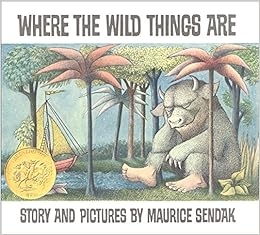
In this story, "Where the Wild Things Are" is under the genre of Science Fantasy Fiction book. The author is Maurice Sendak. This book is very fantasy because the character becomes a wolf out of a suit and then his imagination starts in his room such as being in the forest on a boat in the lake and in real life this does not happen. But Max known as the wolf would start misbehaving and try to do different things that not a human would do if they were wander lost in the woods. Also there is no such of a Human become an animal then turning back to an animal. This book was very popular and is a very well known story.
Social Justice in this story would be self awareness, because in this story, Max doesn't realize after her puts the monsters to sleep that he would become lonely, he should know that if he didn't put the monsters to sleep then he would have some company but unfortunate he did and now he has to learn how to overcome his loneliness.
Tuesday, March 22, 2016
Briella's Fantasy/Sci-Fi Blog - The Giver

The Giver is about a dystopian society where there is no conflict, no war or any strife but also no emotion, color, or free thought. It's centered around an 11 year old boy named Jonas who has been chosen by the town council to become the next "receiver of memory." This position is when the person has access to colors, free thought, emotions... basically, all the things that can cause human beings to error in. Jonas struggles with accepting the responsibilities of being the receiver of memory and the giver believes that he could be of a better investment elsewhere. They plan Jonas' escape and he makes it with a baby that was supposed to be put to sleep. It is the first part of a trilogy.
This book leans more towards the sci-fi genre rather than the fantasy genre because it talks about a place that could be reality one day.
As for the six elements of justice, I believe that this book has the potential to meet all six elements. It deals heavily with ethics and a classroom can have several class discussions off how the community treats its people, about the eugenics, the things that Jonas goes through, et cetera.
Monday, March 21, 2016

Modern Fantasy Book
I have selected a book named, "Corduroy" by Don Freeman. It got published in 1968.
The genre of this story is completely fantasy because it includes a main characters who talks, thinks, acts, and expresses emotion like a human. Story's location is at a big department store with vivid images on illustrations with perfect choice of colors. A main character of the story named Corduroy with a missing-button green overalls desperate looking for a great friendship and a lasting home. While that teddy waits patiently for someone to bring him a sweet home, people keep passing by. But all of a sudden, it becomes an eye-catching teddy bear to a little girl in red dress. She begs and begs to her mom. Her mom expresses her disapproval of decision in 'keeping' that teddy bear due to its untidy appearance. In that night with silent sound, Corduroy decides to explore for a missing button but a watchman captures it. In next morning, a little girl returns with money and cuddles with Corduroy tightly. Being held in a little girl's arm to her home is truly a blessing feeling for Corduroy.
Social Justice: Awareness Rising
This story touches on class issues through discrimination against people because of their appearances. "Don't judge a book by its cover", it means anyone doesn't have a right to judge a person's character or quality at all. As this story emphasizes how important a great friendship is, it leads a teddy and girl to a blissfully happy life. Also, a stuffed-animal bear symbolizes as an orphan, a foster child. This story reflects personal adoption stories where foster kids wonder when will they ever find a home.

Casey's Fantasy Blog

The fantasy book I have chosen is called, "Monsters, Mind Your Manners!" This children's picture book is written by Elizabeth Spurr and Illustrated by Simon Scales.
This fantasy book is based on monsters (obviously). Most of the time, people think of monsters as big, ugly, and mean. However, in this book, the monsters are actually colorful and goofy where they invade people's homes and schools in the neighborhood. These monsters are rude, disgusting, and crazy! At the end, monsters realize that they have missed the best part of bedtime...where the books are read. As the book is being finished, the monsters are put away.
Monsters, Mind Your Manners! describes unrealistic monsters who can speak and perform physical tasks. The pictures are comic-like which made it enjoyable for me to go through.
After further review of this book, there are no elements as far as social justice. The reason behind this is because this fantasy book is based on the monsters' perspective and what they did during their time "alive." As we all know, monsters do not exist so therefore, we are unable to apply this to social justice. Good book nonetheless!

Amy's Fantasy Blog

The title of the book is "There was an old lady who swallowed a fly." Written and Illustrated by Simms Taback. This book is about a lady who swallowed a lot of animals; fly, spider, bird, cat, dog, cow, and a horse. And then, she died.
I thought it was lighthearted fantasy mixed with folklore and poetry. Maybe we do eat some of the animals but not when it is alive :)
As I reviewed on the six elements of social justice, not one of the elements show in the book. It was short and silly. I don't think I will use this book to teach my students because it doesn't teach us anything and the fact that the book ended with the lady that died abruptly took me a surprised. However students can read this book for entertainment.
Kelly's fantasy blog

Jumanji is written and illustrated by Chris Van Allaburg.
Jumanji is a fantasy book about a two children named Peter and Judy. They were bored and looking for something to do when they found the board game called Jumanji. The children play the game and come to realize the jungle animals are coming to life in their home and every move they make comes to life !
Jumanji is an exciting book that brings out the fantasy of animals coming to life. As an animal lover I was really excited to pick this book. The pictures are interesting as well and very detailed. The pictures are in black and white setting the tone of the story and are very realistic looking. This picture book is perfect for elementary grades.
The main elements of social justice in the story include awareness raising and social action. I feel this story can raise awareness because even though it is a fantasy it still has a moral at the end to always read instructions and be aware of what your doing. Second social action plays a role in this story because between 4 kids in the story at the beginning and end, they need to communicate the problems of the game and work together to figure out the best way to win and avoid problems.
Baloney (Henry P.)


For SciFy/Modern Fantasy, I chose the book Baloney by Joe Scieszka and Lane Smith.
This book is about an alien student similar to Earthings. He is late to school one too many times. When his teacher asks his why, he comes up with a lengthy excuse that is very implausible. What was fascinating about the book is that some key words are not in English, making the story and Henry's character seem even more alien. There are 2 points I like about this: 1- it exposes readers to common words in other languages and could pique their interest in learning other languages and 2- with the help of the pictures, children could guess what the words mean, or create their own idea of what the words could mean. It is helpful that the changed words are presented in a different color to help identify that they are not English, and the back of the book has a 'Decoder' (glossary) for all the words.
I can not really connect this book to any of the Social Justice points directly, however, this could lead into a fun activity for teachers and students and have them explore different languages. Students could write their own short story, and then using their own nationalities, change some of the words. Students could trade stories with each other and they could learn some new words in different languages and also learn to respect each others' cultures.
Sunday, March 20, 2016
Liv's Modern Fantasy Blog

Youtube link- https://www.youtube.com/watch?v=HuxChqRTyOA&feature=youtu.be
Monday, March 7, 2016
Briella's Folklore - The Stinky Cheese Man and Other Fairly Stupid Tales

The book I chose for this week's folklore theme is "The Stinky Cheese Man and Other Fairly Stupid Tales" written and illustrated by John Scieszka and Lane Smith.
This book talks about different fairy tales and puts a twist on those stories. For example, the Princess and the Pea story is put to a twist when it is switched to a prince and he puts a bowling ball under the mattresses his potential future wife is sleeping on.
Another twist in the regular fairy tales that we all know about is The Ugly Duckling, in this book, the ugly duckling knows that he will turn into a beautiful swan so he doesn't care but eventually he just ends up being a very ugly duck.
The book contains many stories with a dark twist on it.
The illustration style is very dark and slightly creepy. It reminds me of some of the drawings shown in the Courage the Cowardly Dog series. I think it fits the overall theme of the book, which is chaotic to begin with anyway.
It is tough finding social justice elements that I want to incorporate from this book because they are all very brief and... to be honest, they don't exactly promote positive morals (i.e. encouraging lying in the Prince & the Pea story). However, I could use all of the negatives in this story to ask my students how they would have handled the story better. For example, with the Prince & the Pea story, I could ask my students how they would have approached the situation, how they would have talked with their parents, how to get away from it without lying, et cetera.


The Ugly Duckling

In the Book called "The Ugly Duckling" it is a one the well known folktale stories out there. It is written by Hans Christian Andersen. This folktale story is told by a mother had a group of ducklings born and all were normal but one, and was considered as the Ugly Duckling but the ugly Duckling was the last one to be born. He had so many different traits about him, he was grey, the strongest fastest swimmer out of his group. The Ugly Duckling suffered from his new group of ducks, they did not allow him to participate, would pick on him, and so did the other animals on the farm where he was born. But then one day, he found other swans swimming that looked liked him so he joined them and he finally felt he was apart of again and that he was a beautiful swan.
The Ugly Duckling is known as a the folktale genre. The moral of the story is Everyone is beautiful in their own way even though you may be different from others.
The social Justice I want to use for this story is that, its not about looks, its about who you are known as Self Identity. It is important to know your identity and to accept for who you are because no one is the same and looks do not define one as an individual. Also, social justice is Bullying, because everyone picks on the ugly duckling when there is nothing wrong with him, only just looks different.
Casey's Folklore Blog

My folklore book is called, "Cinder Edna" by Ellen Jackson and is illustrated by Kevin O'Malley. This book is a re-creation of the Cinderella story and the storyline is read from a different perspective.
Cinder Edna follows the story of Cinderella and her next door neighbor, Cinder Enda. As we all know, Cinderella was beautiful, reserved, and was always the center of attention. On the other hand, Cinder Enda wasn't much to look at, except she was strong and spunky. Both worked sunup to sundown for their wicked mothers and stepsisters. While Cinderella was fortunate enough to be rescued by her fairy godmother, Cinder Enda was stuck alone. However, Cinder Enda then met a gentleman that goes by the name, Rupert. While Cinderella was bored of being stuck in the luxury lifestyle that required her to attend endless ceremonies and listed to present speeches, Cinder Enda and Rupert ended up getting married and was able to have her own happy ending.
The moral of this folklore tale is that not those who are well-known, famous, or have everything end up to be successful. Not only that, but it's not about luxury, money, or fame, but to be grateful for what you have. The most important lesson this book can give is to do what makes you happy.
I would like to use Awareness Raising as an example for Social Justice. This tale raises awareness and hopes to be a lesson for younger children. That lesson is to work hard and do what makes you happy because in the long run, things will turn out to be better than what you had thought. In other words, "God has a plan for you." I believe I can use this example in my future classroom to educate my students about the importance of happiness, not the money that comes with it. For instance, I will tell my students, "If you take a job you know you will not like, but get paid well out if it, then you will end up being unhappy. But if you take a job you know you will love and the pay isn't so great, you will be happy regardless."
Sunday, March 6, 2016
Liv's Folklore Blog

The book I chose is, Trouble with Trolls by Jan Brett.
This Trouble with Trolls book explains about how a girl named Treva and her dog planning a trip to walk over Mt. Baldy to see her friend. On the way up she encountered five trolls, one at a time, each troll wanted her dog! She had to find a way to get her dog back by tricking each troll with a piece of her clothing that she said was very beautiful. After encountering each troll, she and her dog finally arrived the top of mountain as well all five trolls to get the dog back. She decided to tell each troll that she can fly with her skis and she can do that if all troll gives back her clothing. Once she is set and held her dog and told all trolls to push her and see her fly. All trolls pushed her together and she skied all way down safely and tricked all trolls once again. After that she never seen the trolls again.
The genre of Trouble with Trolls will be folklore. The moral of the story will be, "those who protect and save animals lead to the way of protecting and saving humanity". This book was inspired by the author's visit to the Scandinavian country of Norway. This book definitely shows cultural values of Scandinavian culture within the pictures inside the story. Mostly the details of clothing and nature that represents Norway. Reading this book always make me feel connected to it when my family's heritage is from Scandinavian. This book is good for sharing cultural experiences and stories of Norway.
One of Social Justices Elements applies greatly to this book will be, Self-love and Knowledge. This story is when some students whose family are part of Scandinavian can show other students what their culture looks like. Expose others with the knowledge of that certain culture and what kind of stories they tend to write & draw? The activities I would include based on this story is doing short skit of the story or introduce the culture of Scandinavian and their folklores.
Wednesday, March 2, 2016
Folklore Blog " Little Red Riding Hood"

The book I chose is "Red Riding Hood" Retold and Illustrated by James Marshall.
The story takes place in a forest with a young girl, her grandmother, and a wolf. This folklore story has been passed down for many many years with different versions and illustrations and retold story's aloud. the story is about a young girl whose traveling across the woods to visit her grandmother. On the way she was told not to talk to strangers. Along the path she met the wolf who pretended to be nice and not like a stranger.
The moral of the story is "don't talk to strangers"
One of the social justice elements I would like to use is Awareness raising. This story is used to raise awareness to young children about talking to strangers and the dangers that can happen. Secondly, I want to use Respect for others. Teachers can use this element to teach students that you need to respect others and not lead them in the wrong path. Red Riding Hood put too much trust into a stranger and it had her lead astray. If that wolf had respect it never would have happened. This story is a folklore that was passed down for many generations and continues to make an impact on children today.
Tuesday, March 1, 2016
Briella's Poetry Book - "How The Grinch Stole Christmas"

I chose the book, "How the Grinch Stole Christmas!" by Dr. Seuss. The story talks about the creatures from Whoville, more specifically, the Who named the Grinch who lives on top of a mountain overlooking Whoville. The Grinch hates Christmas and has vowed to do everything in his power to destroy it. He decides to sneak into all of the Whos' houses and steal all of their Christmas decorations, therefore, ruining Christmas! As he does this (accompanied with his dog, Max), a young Who named Cindy Lou Who wakes up and asks him what he was doing; he then replied that he was taking their things to repair them, and that he would bring them back as soon as he was done. Cindy Lou Who innocently believes this and goes back to sleep, allowing the Grinch to steal all of the decorations and bring them to the top of the mountain to throw off a cliff. As he is on top, he eagerly waits to hear the crying and disappointment of the Whos as they find out Christmas is ruined! To his confusion, he heard singing and displays of joy. The Grinch then realized that Christmas is a feeling, and the fact that he stole all of the displays and decorations didn't mean anything. His heart grew three times its size and he decided to give back all of the things he stole and join the Whos in celebrating the very same Christmas he had once despised.


I believe this book fits well within the children's poetry category. As you will see with the following screenshots of the book, the writing style is very rhythmic and is designed in couplets. The words are aligned in a way to complement the drawings next to it.
Speaking of the illustrations within this book, the artistic style of this book is very "sketchy," mostly in black and white and are relatively detailed. The only color that is in this book (other than the cover page, which has green) is red. I believe that the color red also contributes partly to the poetic aspect of this book, it's a metaphor for a number of things: Christmas (the Grinch's jacket, ornaments, decorations), love (when the Whos spread joy and cheer despite Christmas being stolen), anger (the Grinch's eyes), et cetera. I believe that children, even though they might not have the mental tools to consider things like metaphors yet, do notice these things and they do take them into account.
Another benefit with Dr. Seuss' books/poetry is that they are chock full of vocabulary, excellent word choices and interesting adjectives. This helps the reader make connections and develop literary skills that would be more difficult to learn via other literary devices.
This book meets several of the six elements of social justice.
Element One - Self Love and Knowledge: The Grinch is a very bitter person and when he tries to ruin the day, the Whos had enough self love and knowledge of what is important and should be prioritized (being together, Christmas cheer, love, etc).
Element Two - Developing Empathy: It is hard to sympathize with the Grinch because not many children want Christmas to be destroyed, but this book shows the Grinch's journey towards developing empathy and not many children's books have character development so it's a nice introduction to it.
Element Four - Fighting Oppression: The article about the six elements of social justice mentions using the word unfairness to explain oppression to children, and even though I am not sure what kind of ISM/oppression is used in this book, the concept of unfairness is clear.
Green Eggs and Ham (Poetry)


I chose the book Green
Eggs and Ham; written and illustrated by Dr. Seuss.
This book is considered poetry because there is a lot of
rhythm and rhymes in the story. Sam is trying to get his friend to try green
eggs and ham, providing many different situations that may convince him to eat
them. The friend continually declines the food and tells his friend to leave
him alone. This book is good for teaching children to try new foods, especially
if they are picky eaters. Green eggs and ham doesn’t look too appetizing, but
you never know until you try it. It can also show children that they should try
new things and take chances. I grew up with many, many Dr. Seuss books and this
is definitely one of my favorites, and I’m still learning from it. Growing up I
made decisions about dinner because of the strict medicine therapy I needed. This
later caused me to become a picky eater because growing up, I always got the
food I wanted. Now I’m slowly starting to let myself try things I never ate
growing up, and finding I like a lot more than I originally thought.
I believe this book can teach children 2 social justice
elements; self love and knowledge, and respect for others. Students must know
themselves and be comfortable taking the chance of trying something new, and
must understand that even though others like or dislike something, doesn’t mean
they have to also. Similarly, students must respect others and their
preferences for things. Just because one group of students likes grapes, doesn’t
mean that the students who don’t are any different than them.
Subscribe to:
Comments (Atom)